

Heatsense offers cable design services for a wide range of industries and leading-edge technology companies. With our extensive expertise and experience, we have successfully designed cables that have been utilised in some of the most demanding and high-profile projects worldwide, including CERN’s Large Hadron Collider, ITER’s Tokamak Reactor, Rolls-Royce aerospace test rigs and several companies developing nuclear fusion technologies.
Our cable design service encompasses a thorough understanding of your specific requirements and the ability to create innovative solutions that excel in extreme conditions. Depending on their design, our cables are capable of operating in extreme environments ranging from -273°C (-459°F) to +1250°C (+2282°F) and with additional protection from radiation, electrical interference, external pressure based on very stringent tolerance requirements.
Can't find what you need?
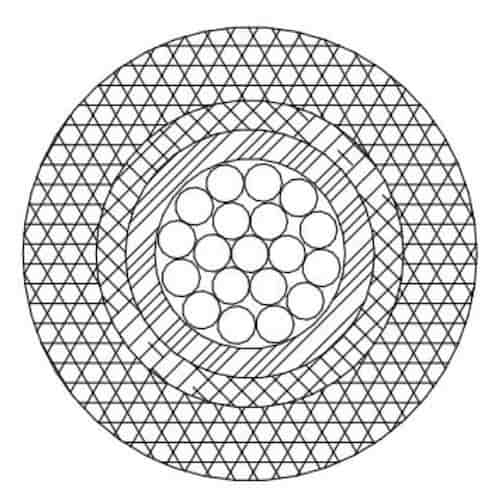
Design
Our advanced cable solutions are designed to meet the rigorous standards of the most extreme industries, ensuring seamless performance in demanding environments.
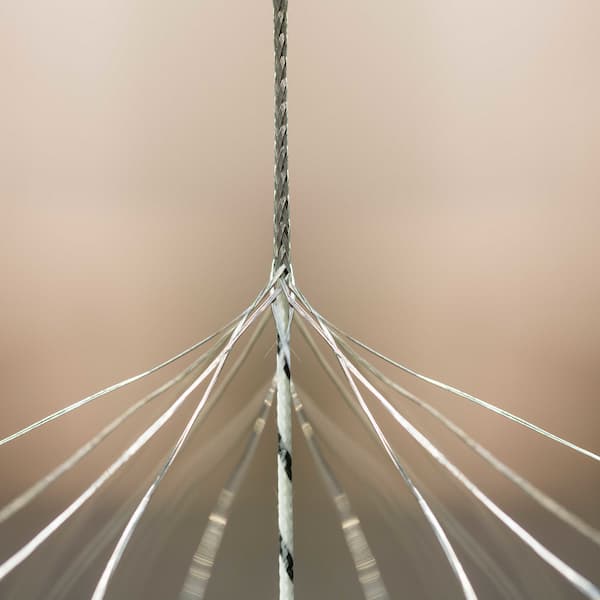
Braiding
Our cable braiding process adds critical protection to our cables using a range of materials to suit the requirements of the environments in which they are be installed.
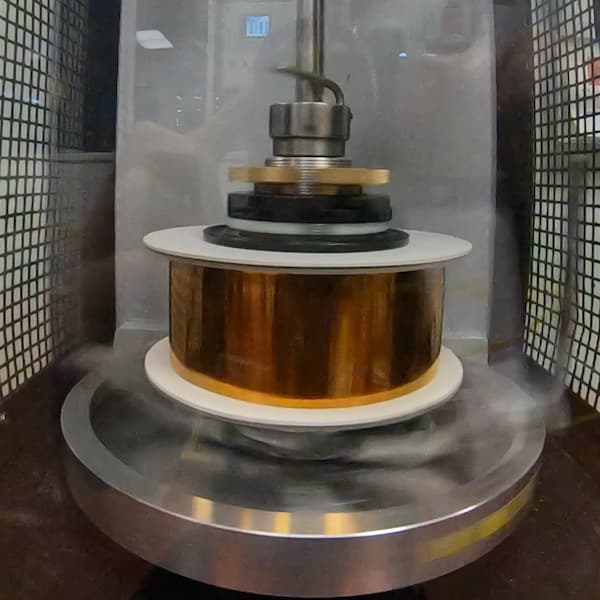
Taping
Taped cables are designed to provide exceptional thermal stability, chemical resistance, electrical insulation and radiation properties, making them ideal for use in the most demanding applications.
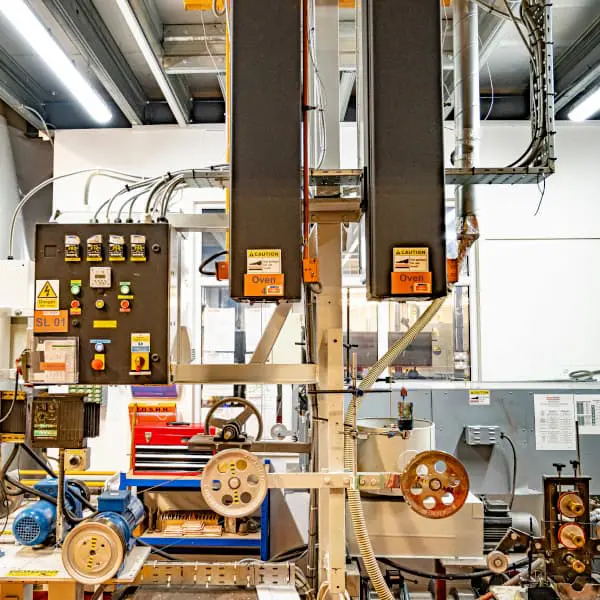
Sintering
Using temperature controlled ovens, Heatsense heat taped material to just below melting point, allowing it to form a cohesive uniform layer that enhances the durability and resistance to harsh environmental conditions.
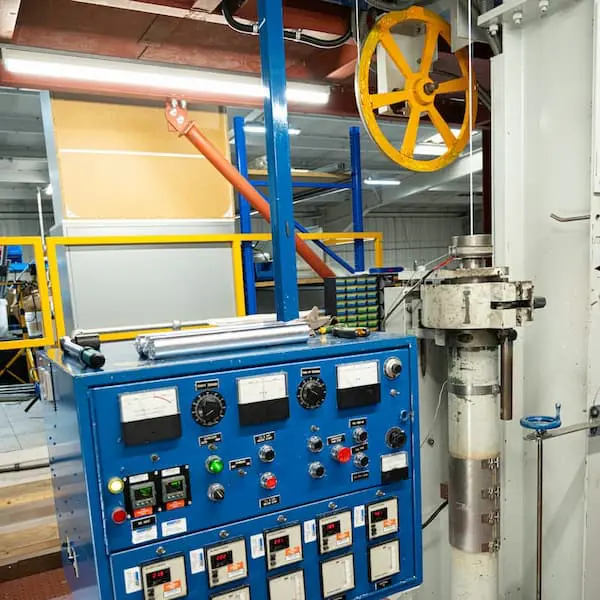
Extrusion
Using a purpose built extrusion line, Heatsense coat cables with PTFE, known for excellent temperature resistance, chemical inertness, and electrical insulation, is an ideal material for demanding applications.
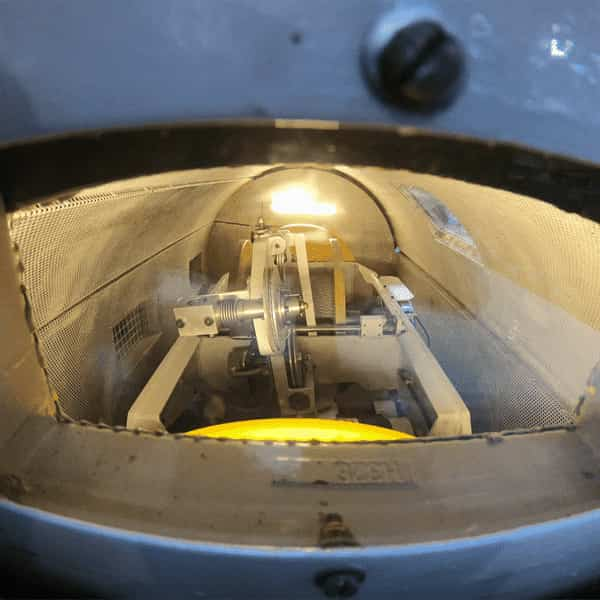
Twisting & Laying up
The cable twisting process is designed to ensure the cable’s mechanical stability, flexibility, and overall performance, particularly in demanding applications where reliability is paramount.
Introduction
Electrical cables are frequently among the most critical components in high-reliability systems. Unlike active electronics, cables are often expected to function for decades without maintenance, replacement or inspection. In extreme environments, failure of a cable system may lead to catastrophic consequences, including loss of aircraft systems, nuclear instrumentation failure or shutdown of critical energy infrastructure.
Harsh environments typically expose cables to several interacting stress factors:
- Elevated or cryogenic temperatures
- Thermal cycling
- Vibration and mechanical fatigue
- Radiation exposure
- Chemical or fluid contamination
- Pressure and moisture ingress
- Electromagnetic interference
Cable design must therefore adopt a systems engineering approach where, electrical, mechanical, chemical and thermal properties are balanced within a single construction.
Typical industries requiring such cables include:
- Aerospace and defence
- Nuclear fission and fusion energy
- Deep-sea and offshore energy
- Motorsport and automotive testing
- Scientific instrumentation
- Research & development
- Space systems
2. Environmental Stress Factors
2.1 Temperature Extremes
Temperature represents one of the most severe constraints on cable materials. Standard PVC or polyethylene insulated cables are typically limited to 70–90 °C continuous operation. In contrast, aerospace and defence cables frequently require continuous service temperatures between 150 °C and 260 °C, with short-term excursions significantly higher.
Examples include:
Environment Typical Temperature
- Jet engine zones 200°C – 300°C
- Spacecraft wiring -150°C to +200°C
- Downhole oil & gas up to 200°C
- Nuclear instrumentation 150°C to 250°C
- Fusion research variable – from cryogenic to extreme high temperatures
Thermal cycling presents an additional challenge. Repeated expansion and contraction of materials with different coefficients of thermal expansion can lead to micro-cracking of insulation or separation between layers.
2.2 Mechanical Stress and Vibration
High-performance vehicles, aircraft and rotating machinery generate continuous vibration. This creates several failure modes:
- Conductor fatigue and strand breakage
- Abrasion between cable layers
- Connector failure
- Insulation wear
Fine-stranded conductors are typically preferred in these environments because they improve flexibility and reduce stress concentration within individual wires.
2.3 Chemical Exposure
Many harsh environments involve exposure to aggressive fluids such as:
- Aviation fuel
- Hydraulic fluids
- Engine oils
- Coolants
- Seawater
- Solvents
Chemical compatibility therefore becomes a major driver of insulation material selection. Fluoropolymers, in particular, offer excellent resistance to hydrocarbon fluids and solvents.
2.4 Radiation Exposure
Radiation can significantly degrade polymeric materials through chain scission or cross-linking reactions. In nuclear facilities or space environments, cable insulation must tolerate significant radiation doses without embrittlement or electrical breakdown.
Typical radiation tolerance:
Material Approximate Radiation Tolerance
- PVC Low
- Polyethylene Moderate
- Fluoropolymers Good
- Polyimide Very good
- Mineral insulation Excellent
In nuclear instrumentation systems, radiation doses may exceed 10⁶ to 10⁸ Gy over the service life.
2.5 Pressure and Moisture
Subsea cables and downhole energy applications may experience extreme hydrostatic pressure and water ingress risk. Cable design must therefore incorporate:
- impermeable sheaths
- water blocking layers
- corrosion-resistant materials
3. Conductor Materials
3.1 Copper Conductors
Copper remains the dominant conductor material due to its excellent electrical conductivity and manufacturability.
Typical properties:
Property Copper
- Electrical conductivity ~58 MS/m
- Density 8.96 g/cm³
- Melting point 1085³C
For harsh environments, copper is often plated to improve oxidation resistance.
3.2 Silver-Plated Copper
Silver plating is commonly used in aerospace cable constructions.
Advantages:
- Excellent high-temperature oxidation resistance
- Improved solderability
- Reduced contact resistance
Silver-plated conductors typically operate up to approximately 200–250 °C.
3.3 Nickel-Plated Copper
For environments exceeding the temperature limits of silver plating, nickel-plated copper is used.
Advantages:
- Excellent oxidation resistance above 260 °C
- Improved mechanical durability
- High-temperature stability
Nickel plating is commonly used in engine-zone aerospace wiring.
3.4 High-Temperature Alloys
In extremely demanding environments, alternative conductor alloys may be used:
- nickel alloys
- stainless steel
- thermocouple alloys
These materials sacrifice conductivity in favour of thermal stability.
4. Insulation Systems
The insulation system defines the electrical and environmental capability of the cable.
4.1 Fluoropolymers
Fluoropolymers represent the most widely used high-performance cable insulation materials.
PTFE (Polytetrafluoroethylene)
Properties:
- Continuous temperature: ~260 °C
- Excellent chemical resistance
- Low dielectric constant
- High melting point
PTFE is widely used in aerospace and military cable specifications.
FEP (Fluorinated Ethylene Propylene)
FEP offers many of the properties of PTFE but can be melt-extruded, simplifying manufacturing.
Typical characteristics:
- Continuous temperature: ~200 °C
- Excellent electrical insulation
- Good chemical resistance
PFA (Perfluoroalkoxy)
PFA combines the processability of FEP with higher temperature resistance.
Typical characteristics:
- Continuous temperature: ~260 °C
- Excellent chemical resistance
- High dielectric strength
4.2 Polyimide Insulation
Polyimide-based insulation systems are commonly used in aerospace applications.
Key advantages:
- Exceptional thermal stability
- Good radiation resistance
- Low mass
However, polyimide insulation can be susceptible to mechanical damage and moisture absorption, requiring protective outer layers.
4.3 Glass Fibre and Composite Systems
Glass fibre tapes impregnated with resins or fluoropolymers provide excellent high-temperature stability and mechanical strength.
Typical uses include:
- furnace instrumentation
- industrial heating systems
- aerospace test equipment
4.4 Mineral Insulated Cables
Mineral-insulated (MI) cables represent the most robust cable technology available for extreme environments.
Construction:
- solid metal sheath
- magnesium oxide insulation
- solid copper or alloy conductors
Advantages:
- continuous operation above 600 °C
- exceptional fire resistance
- radiation immunity
MI cables are widely used in nuclear reactors and fire-critical circuits.
5. Shielding and Electromagnetic Protection
Electromagnetic interference (EMI) can disrupt signal integrity in sensitive instrumentation systems.
Shielding methods include:
- copper braid shields
- aluminium-polymer tapes
- double braided screens
- foil plus braid combinations
Shield design must balance:
- coverage
- weight
- flexibility
- attenuation performance
6. Mechanical Protection
Outer protection layers are necessary to prevent damage from abrasion, crushing, or environmental exposure.
Common protective layers include:
- fluoropolymer jackets
- cross-linked polyolefin
- stainless steel braids
- metallic armour
In aerospace wiring systems, weight reduction is a major design constraint, requiring careful optimisation between protection and mass.
7. Cable Architecture and Design Considerations
Key design parameters include:
Conductor stranding
Determines flexibility and fatigue resistance.
Insulation thickness
Defines electrical breakdown voltage and mechanical robustness.
Shield coverage
Typically, 70–95% braid coverage for EMI control.
Jacket design
Protects against mechanical and environmental damage.
Thermal management also plays a role. In high-current applications, cable heating must be managed to prevent insulation degradation.
8. Testing and Qualification
Harsh environment cables undergo rigorous testing before deployment.
Typical qualification tests include:
- thermal ageing
- vibration and mechanical fatigue
- fluid immersion testing
- radiation exposure
- flame resistance
- electrical endurance testing
These tests ensure cables meet the reliability requirements demanded in aerospace, defence, and nuclear applications.
9. Emerging Developments
New materials and technologies are expanding the capabilities of harsh environment cables.
Areas of active research include:
- radiation-resistant polymer systems
- nano-filled insulation materials
- high-temperature superconducting cables
- lightweight aerospace wiring systems
In particular, fusion energy research and next-generation aerospace propulsion systems are driving demand for cables capable of surviving both cryogenic and high-temperature environments within the same system.
10. Conclusion
Electrical cable systems designed for extreme environments require careful integration of materials science, electrical engineering, and mechanical design. Selection of appropriate conductor materials, insulation systems, and protective layers allows cables to maintain performance under severe environmental stress.
As aerospace, nuclear, and advanced energy technologies continue to evolve, demand for specialised high-reliability cable systems will increase. Continued innovation in materials and cable architecture will therefore remain essential to ensuring reliable operation in the most demanding environments.
Cable Design FAQs
What expertise does Heatsense Cables offer in cable design for extreme environments?
Heatsense Cables specializes in designing cables that operate in extreme environments. Our experienced team possesses a deep understanding of the unique challenges posed by extreme conditions, such as high and low temperatures, exposure to chemicals, radiation, ultra-high vacuum, low outgassing environments and mechanically demanding stresses.
Our expertise lies in developing cables that offer exceptional performance, reliability and durability, ensuring they meet or exceed the requirements of applications in diverse industries. From particle accelerators to nuclear reactors and aerospace testing rigs, our cable designs have proven themselves in some of the most challenging environments on the planet and in space.
What factors should be considered when ordering cable design services for extreme environments?
When enquiring about cable design services for extreme environments, several factors need to be considered. The operating temperature range is of utmost importance, as it determines the conductor and insulation materials that can withstand the required temperatures.
Additionally, the cable’s resistance to chemicals, radiation, low vacuum environments and mechanical stresses need to be considered.
Other considerations include the required electrical properties, such as conductivity and shielding, as well as the cable’s flexibility, size, and weight. By providing us with comprehensive information about your application’s specific requirements, we can tailor our cable design services to deliver a solution that precisely meets your needs.
What is the operating temperature range of the cables designed by Heatsense Cables?
The operating temperature range of our cables can vary based on the specific requirements of your application. We design cables capable of withstanding temperatures ranging from cryogenic conditions from -273°C (-459°F) to extremely high temperatures exceeding +1250°C (+2282°F).
Can the cables withstand exposure to chemicals and corrosive substances?
Yes, our cable designs are developed to withstand exposure to a wide range of chemicals and corrosive substances. We select materials and insulation systems that exhibit excellent resistance to chemicals and ensure long-term durability and reliability.
Do you provide custom cable designs for specific applications?
Absolutely! Our cable design services are flexible enough to ensure a customised solution for your specific needs. We work closely with you to understand your needs and develop tailored solutions that address the challenges posed by extreme environments.
Are your cable designs suitable for high-voltage or high-current applications?
Yes, we have extensive experience in designing cables for high-voltage and high-current applications. Our designs incorporate appropriate insulation systems and conductor materials to ensure reliable performance under demanding electrical conditions.
Can you provide certification and documentation for regulatory compliance?
Yes, we understand the importance of regulatory compliance. We can provide the necessary certifications, documentation and test reports to ensure our cable designs meet the relevant industry standards and regulations.
Sectors we Test Cables for
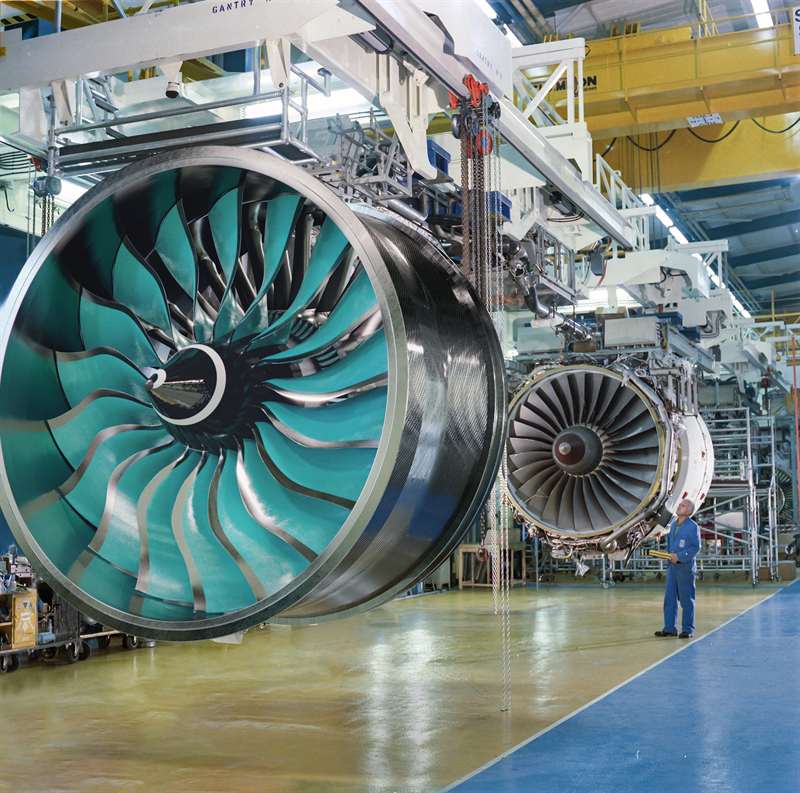
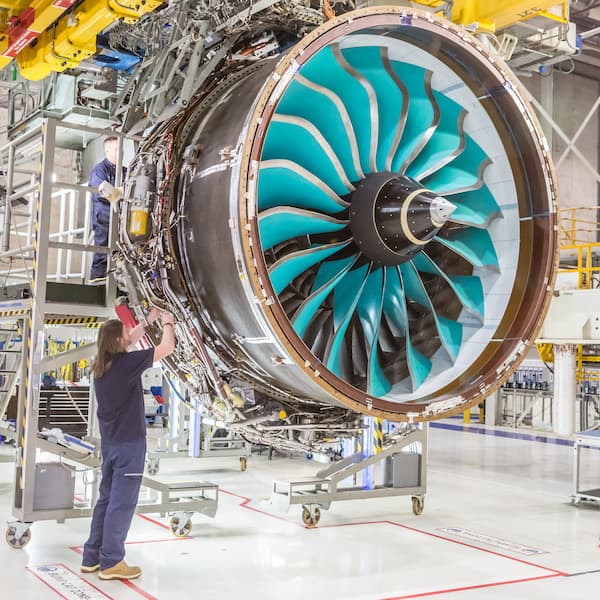
Aerospace
Heatsense recently achieved the AS 9100 Rev D certified for quality manufacturing in the Aerospace industry. All of our Aerospace cables are manufactured to the highest required specifications.
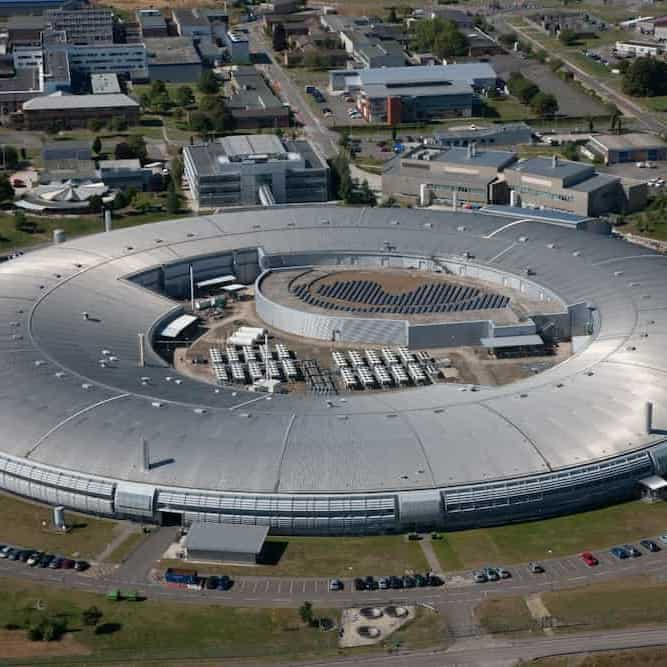
Nuclear
Our nuclear industry cables are designed to withstand the extreme conditions and stringent requirements of nuclear environments. Heatsense delivers cable solutions you can depend on.
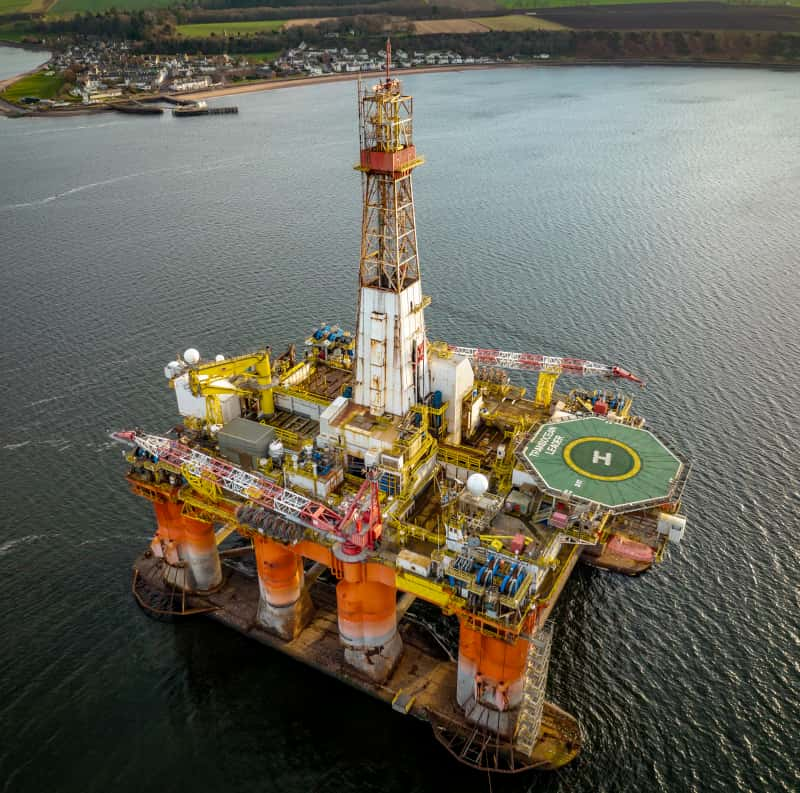
Oil & Gas
With a commitment to quality and compliance with industry certifications, we provide durable and efficient connectivity solutions tailored to the unique challenges of the oil and gas sector.
General Industry
Engineered with durability and safety in mind, our solutions meet the rigorous demands of general industry, enabling efficient and uninterrupted operations across a very broad sector.
Research & Development
Our advanced cable solutions are designed to meet the rigorous standards of research and development, ensuring seamless performance in demanding environments.
You may also be interested in
Heat Resistant Cables
Aerospace Cables
Radiation Resistant
Oil & Gas Cables
General Industry Cables